
Category: Uncategorized

  • Why Cities Aren’t Dying

    It’s a bit spooky to cycle around downtown Washington these days, for reasons having nothing to do with campaigns and elections. Most offices are closed, most hotels are nearly empty or locked up entirely, the theaters have offered no shows since March, and the coffee shops, restaurants, and retailers that catered to a bustling city are either out of business or struggling to survive. If you believe what’s in the papers, city dwellers who can afford to do so are fleeing for the hills (or beaches) and plan to live there permanently. Their employers, having learned to function virtually during the pandemic, will slim down their offices and make telework permanent for most of their employees. The city will wither.

    This “trend” is usually illustrated with anecdotes about families who have forsaken their Brooklyn brownstones for five acres with pool in Woodstock or the Hamptons, coupled with a mention of some company that says it will henceforth allow employees to live and work wherever they wish. But this is one of those “forever” trends that will burn itself out fairly soon. As I argue in Outside the Box, globalization will increasingly have more to do with spreading ideas than with moving goods, and urban centers will be at the heart of that process.

    Companies and non-profit organizations choose to locate in dense cities for good reasons. One of the main ones, obviously, is access to a large pool of workers with needed skills — and while some of those workers will undoubtedly be happy to work remotely so they can go fishing on their lunch hour, the most ambitious will want to be in the middle of the action, whether in a research center, a newsroom, or a corporate headquarters. That’s why, within just the past couple years, companies such as Caterpillar and General Electric moved their headquarters from small towns or suburbs to city centers: the workers they most coveted didn’t want to be in the boonies.

    A second reason companies want to bring their office workers together is to make them feel part of an organization. People get satisfaction from working and sharing ideas with other people. When employees leave, hiring replacements is expensive and time-consuming. If bringing workers to a downtown office makes them more engaged, increases tenure, and reduces the need for recruiting, it’s a good investment.

    The third reason the urban office won’t go away — perhaps related to the other two — is that firms in big cities have higher productivity than those elsewhere. Wages, rents, lunch dates, and construction have always been far more expensive in London, San Francisco, and Shanghai than in exurban business parks or smaller towns. The only reason employers accept that burden is that the benefits of locating in a dense city more than make up for the costs. Video calls may work fine for handling routine business, but they don’t seem so effective in coming up with ideas for the sorts of new products and new processes that boost profits. Having people together, in one place, makes a difference.

    My guess is that the pandemic will lead to some changes on the margin. Before COVID-19 arrived, only one U.S. worker in ten teleworked. Less than half of all workers thought that remote work might be feasible in their jobs, and among that minority, only one-fourth, mainly college-educated workers in managerial or professional jobs, regularly worked from home. The experience of the pandemic may encourage employers to permit occasional telework among other groups of workers. But as vaccines come into use, most of us will be told to head back to the office, and as we do, cities will bustle once again.

  • Profitable Again?

    The container shipping industry is finally awash in money, as rates on some routes have doubled in the past few months. For some people, this confirms the wisdom of the past decade’s rush to build enormous container ships. The Wall Street Journal recently published an article of mine sharply disagreeing with this view; as I wrote, consolidation driven by the high cost of building megaships has allowed the surviving carriers profitable by idling ships. I think the claim that these big, slow, unreliable ships have improved supply-chain efficiency and reduced costs for shippers is just not true.

    Hercules Haralambides, a well-known professor of maritime economics in Rotterdam, has triggered further discussion on this point with a recent post. Professor Haralambides has been a long-time critic of what he terms the “megaship folly,” and he has latched on to my claim, laid out in detail in my new book Outside the Box, that only hidden subsidies have made the megaships financially viable. The vessels still have their defenders, but that seems to have become a minority view within the shipping industry itself.

    It’s important to note, as well, that the shipping industry’s sudden profitability depends entirely on a surge of exports from China after COVID-19 disrupted trade earlier this year. The surge, in my view, is unlikely to last. Consumers in many countries have been able to build up their savings because shutdowns related to the coronavirus have made it harder to spend money. When people finally feel a bit safer, they’ll be wanting to buy plane tickets, restaurant meals, and live entertainment, not goods that move in metal boxes.

  • How the Supreme Court Made Jeff Bezos’s Fortune

    The arcane legal principle of stare decisis — literally, to stand by things decided — is in the spotlight as the Senate considers the nomination of Amy Coney Barrett to the U.S. Supreme Court. Opponents of her nomination, concerned to protect the court’s past decisions establishing a constitutional right to abortion, demand that she pledge to stand by those precedents. Some of her supporters reject stare decisis, at least in cases where, in their belief, the court misconstrued the Constitution. Barrett herself has written a good bit about stare decisis, and her work suggests that, at the very least, her commitment to upholding precedent is a good bit less than ironclad.

    This should be no surprise. Over the years, the justices have embraced stare decisis when it suited them, ignored it when it did not. The world’s wealthiest man, Amazon.com founder Jeff Bezos, owes his fortune to the court’s inconsistency on this point.

    Back in 1992, before Amazon was a twinkle in Bezos’ eye, the court heard a case filed by a catalog retailer, Quill Corporation. Quill sold office supplies, taking orders by phone and mail and shipping the purchases from warehouses in three states. About 3,000 of its customers were in North Dakota, and the state tax commissioner insisted that Quill pay sales tax on its sales in the state. Quill objected that its sales should not be taxed there because it had no place of business in North Dakota. The justices ruled unanimously in Quill’s favor, citing previous decisions and “the doctrine and principles of stare decisis.”

    Internet retailing did not exist when the court ruled in Quill Corp. v. North Dakota. But when Amazon.com started selling books in 1995 from a warehouse near Seattle, Quill allowed it to sell to customers in other states tax-free, while local bookstores had to add state and local sales taxes — around 7.25% in California, up to 8.25% in Texas, nearly 10% in Tennessee — onto every transaction. As I note in my book The Great A&P, internet merchants, of which Amazon was easily the largest, may have avoided charging their customers as much as $33 billion a year in sales taxes thanks to Quill. The playing field was tilted sharply in Amazon’s favor, helping it cut deeply into the sales of bricks-and-mortar competitors.

    Fast forward to 2018. By then, Amazon’s strategy had changed. Next-day delivery had become its big selling point, requiring it to build distribution centers by the score. It had also acquired hundreds of Whole Foods supermarkets. With a physical presence in almost every state, Amazon had to collect sales taxes everywhere, while many other internet retailers did not. Quill, which once gave Amazon an edge, now left it at a cost disadvantage.

    The Supreme Court came to Amazon’s rescue. In 2018, in a case called South Dakota v. Wayfair, it threw stare decisis overboard, ruling that states could tax sales by out-of-state sellers. “Quill’s physical presence rule intrudes on States’ reasonable choices in enacting their tax systems,” the court found. “And that it allows remote sellers to escape an obligation to remit a lawful state tax is unfair and unjust.” Henceforth, all out-of-state sellers would have to comply with the state sales tax laws that already applied to Amazon. The threat that other online merchants could undercut Amazon by not charging sales taxes magically disappeared.

    Not a word of the Constitution changed between Quill and Wayfair, but the Supreme Court’s reliance on stare decisis changed enormously. Had it been as eager to override precedent in 1992 as it was in 2018, Amazon might never have become one of the world’s most valuable companies, and your neighborhood store might still be in business.

  • The Big Day

    A book has a lengthy time-line. Drafting a proposal, chewing it over with an agent, refining it, submitting it to publishers, and haggling over a contract can take several months. The research and writing may last for years. And then, ideally by the contractual deadline, the manuscript moves to the publisher, which has its own timetable: so many weeks for editors to read and comment, so many more for the author to revise, a month or two for the copy editor, more time for the proofreader and the designer, time for the printer to turn these years of work into a physical book, and still more time to deliver the books to wholesalers and retailers.

    So I’m pleased that I can finally announce that my latest book, Outside the Box, has been released by Princeton University Press. I conceived the book as a short, lively history of globalization, meant to help readers think about the modern economy in a different way. It shows how the creation of long-distance value chains in the late 1980s represented a marked change in the world economy. On balance, I think, this was good for the world, but I argue that it was taken too far because of large government subsidies and the systematic misjudgment of risk by businesses. As companies began to account properly for the risks of globalization, cross-border investment fell sharply and foreign trade lagged long before Brexit, Donald Trump’s presidency, and the coronavirus. I disagree with glib claims that globalization is over; instead, I assert, it is entering a new phase in which moving containers filled with goods will matter much less than moving services, information, and ideas.

    You can learn more about Outside the Box and read a brief interview with me on the publisher’s website, and you can check out this kind review that ran in The Wall Street Journal. I look forward to your comments.

  • After the Age of Stuff

    The last few decades, during which long value chains have reshaped the world economy, have been notable for one characteristic above all: a rapidly improving material standard of living.  In 1987, China’s streets were crowded with bicycles, and its auto plants turned out all of 17,840 new cars; thirty years later, China produced more motor vehicles by far than any other country. The price of clothing tumbled, which may explain why the average person in Great Britain purchased five times as many pieces of apparel in 2017 as three decades earlier. The median new home built in the United States in 2017 was 38 percent larger than in 1987, with 2,426 square feet to fill with acquisitions, and there was a one-in-three chance that it had more than one refrigerator. The intervening years could aptly be named the age of stuff.

    Those days are not entirely over, but data from many countries suggest that consumers increasingly are spending their money on services and experiences rather than goods. In part, that’s because goods prices are falling while services prices are not. But it also reflects real changes in purchasing patterns.

    There are several reasons “stuff” is losing ground. One is that the world is aging. From Iran to China to Mexico to Italy, median ages are moving steadily higher. Older households have had years to accumulate belongings and are often disinclined to acquire more; vacation trips, restaurant meals, and medical bills are likely to figure larger in their spending than furniture and fixtures.

    Another factor suppressing demand for physical products is the transformation of goods into services. Digital downloads and streaming services have made it possible to enjoy films, books, and music without physically possessing a television set, a book, or a stereo. Automakers assume that consumers will prefer to pay a car-sharing service for access to a vehicle when needed rather than purchasing a car for exclusive use—a development that seems likely to lead to a decline in the total number of registered vehicles. Instead of buying dresses, some women are renting them for a few days from an apparel lending service. Sharing reduces the waste of assets sitting idle—and thereby reduces the demand for those assets.

    Many industries will still involve making stuff, but the manufacturing process will likely become simpler, requiring less labor. Unlike vehicles powered by gasoline or diesel engines, electric vehicles do not have engines, transmissions, and emissions-control equipment, so as they gain market share, there will be less need for workers to produce gears and piston rings—and less reason to farm production out to low-wage countries. Automated factories are now making athletic shoes in the United States and Germany, taking jobs from factory workers in Indonesia. With additive manufacturing, in which a computer directs a printer to build an object by depositing layer upon layer of a plastic or metallic material at precise locations, manufacturers can make specialized parts in small quantities near where they are needed instead of shipping them from far away. By squeezing out labor costs, such technologies are eliminating a major rationale for far-flung value chains.

    All these developments were underway well before China announced its Made in China 2025 plan in 2015, the British voted to leave the European Union in 2016, and Donald Trump became the U.S. president in 2017. I think they’ll continue even if the United States and China retreat from the brink of a trade war. Globalization isn’t going away, but I expect that over the coming years it will have less and less to do with giant ships carrying boxes full of stuff around the world. For more on why I think globalization is changing, see my new book, Outside the Box.

  • The Next Retail Revolution

    Brooks Brothers. Lord & Taylor. J.Crew. Ann Taylor. Sur la Table. Lucky Brand. J.C. Penney. Neiman Marcus. GNC. A long list of retail names has ended up in bankruptcy court this year, and some mall owners are likely to follow. By one estimate, 25,000 U.S. retail stores could close this year. If you believe what you read, traditional retailing is in its death throes, and online sellers, led by Amazon.com, own the future.

    I disagree. In fact, I think store-based retailing has a promising future.

    Obviously, retailers have been hit hard by the pandemic; many of them asphyxiated when they were forced to keep their stores closed for extended periods. Yet blaming the current crisis in retailing on COVID-19 is far too simple. Most of these companies were in trouble long before the coronavirus came along. Some might have survived had they not fallen into the hands of vulture investors who loaded them down with debt. Others unwisely defined themselves as mall-based retailers, a fatal mistake given that even teenage girls seem to have lost interest in hanging out at the mall.

    So why am I bullish on retailing?

    First, the vast number of empty storefronts undoubtedly means that retail rents are plummeting. Only yesterday, commercial property owners were in the driver’s seat, especially in prospering urban centers; now, landlords are offering deals everywhere, and some may be desperate enough to rent to independent local merchants they might previously have snubbed. This makes it feasible to test retailing concepts that were not viable when rents were higher.

    Second, the demise of so many venerable names long past their prime, precluded from innovating by the incessant need for cash to service exorbitant debts, has created space for entrepreneurs with new ideas. These are likely to be people who’ve grown up in the virtual world and understand that online shopping is here to stay. They will shape their stores to offer experiences and services that will never be available on Amazon and eBay, and will draw customers who value shopping as an in-person social activity that the internet cannot provide. The best will fully integrate their physical stores with their websites, something still beyond the capabilities of many bricks-and-mortar retailers.

    With the pandemic still raging in many places, it’s probably too early for these new retail shoots to sprout. A year from now, though, the landscape may look quite different.

  • My Adventures in Self-Publishing

    When my book The Great A&P was published back in 2011, a major commercial publisher handled the copy editing, the design, the printing, and the distribution. My main jobs were the parts I’m good at, the research and the writing. It was a piece of cake.

    When I decided to put out a revised edition, I had to figure out how to handle all those other tasks I’m not so good at — or find others to do them. It wasn’t a piece of cake. Now that the book is out, I’ve written an article about my experience for the American Historical Association’s Perspectives on History. It’s called “Self-Publishing a Second Edition: A Historian’s Adventures in Going It Alone.” I hope you enjoy it.

    The Great A&P Second Edition
  • The Post-Zoom World

    In March, as much of the country was shutting down to slow the spread of COVID-19, I attended an annual conference. Instead of meeting in Charlotte, our association convened on Zoom. The president’s thoughtful address came off flawlessly. I delivered a paper, moderated a session, and saw a dozen interesting presentations, each followed by animated discussion. By workaday measures, our conference was a great success.

    Yet for me, it wasn’t successful at all. I ran into no one in the hallway and met no one for a drink. I had none of the unexpected encounters that make academic conferences worthwhile, and came away with no great inspirations for new projects. And I had very little opportunity to renew ties with friends and colleagues, some of whom I routinely encounter at conclaves such as this. Our conference was less a gathering than a business meeting that just happened to be online. I promise that if we can manage to pull off our next one in person, I will never complain about hotel coffee again.

    So when I hear the claim that COVID-19 will change something or other forever, I’m skeptical. Yes, plenty has changed for the time being: road warriors and bucket-list travelers are stuck at home; shopping malls are silent; fine restaurants are reduced to serving take-out; most people are working remotely if they’re lucky enough to be working at all. Some airlines and department stores may die, the gig economy doesn’t seem so cool, and would-be hoteliers have learned that buying a house to rent out on Airbnb isn’t a sure-fire bet.

    Yet the fact that we’ve learned new ways of living doesn’t mean we won’t go back to the old ones. Watching travel videos isn’t much of a substitute for being there. While shopping malls were in trouble long before COVID-19, Amazon.com, for all its brilliance, has not figured out how to turn online shopping into a fun social experience. Spending big bucks to carry out a meal in a plastic bag provides the same calories and taste sensations as dining in the restaurant, but it doesn’t provide the same pleasure. After years of complaining about their long commutes, many teleworkers are champing at the bit to return to the office because, well, working alone at home leaves them no office mates to complain to.

    My bet is that after we eventually ease out of social distancing, the post-Zoom world will be a lot less different than we might expect. Yes, some of our familiar shops and eateries will have vanished, but the empty spaces they will leave behind will rent for less, offering opportunities for entrepreneurs. Yes, we’ll be wearing face masks on planes for a while, but competitive pressures will drive airlines to offer low fares, and many of us will choose a middle seat in sardine class to save a few bucks. Some big banks will take a beating, but then they’ll go back to packaging speculative loans into incomprehensible securities, because that’s what big banks do. And yes, firms will pay a bit more attention to the resilience of their supply chains, but globalization won’t be put back in a bottle. If anything, COVID-19 has reminded us that much of what matters is indifferent to borders and to national identify, whether we like it or not.

  • Megamess

    The world economy, as you may have noticed, hasn’t been doing so well of late. Economic growth was slowing and international trade languishing even before COVID-19 swept across the globe. Now, we’re tumbling into a downturn that makes the global financial crisis of 2007-2009 look mild. So, of course, it’s the perfect time to introduce the largest containership ever built.

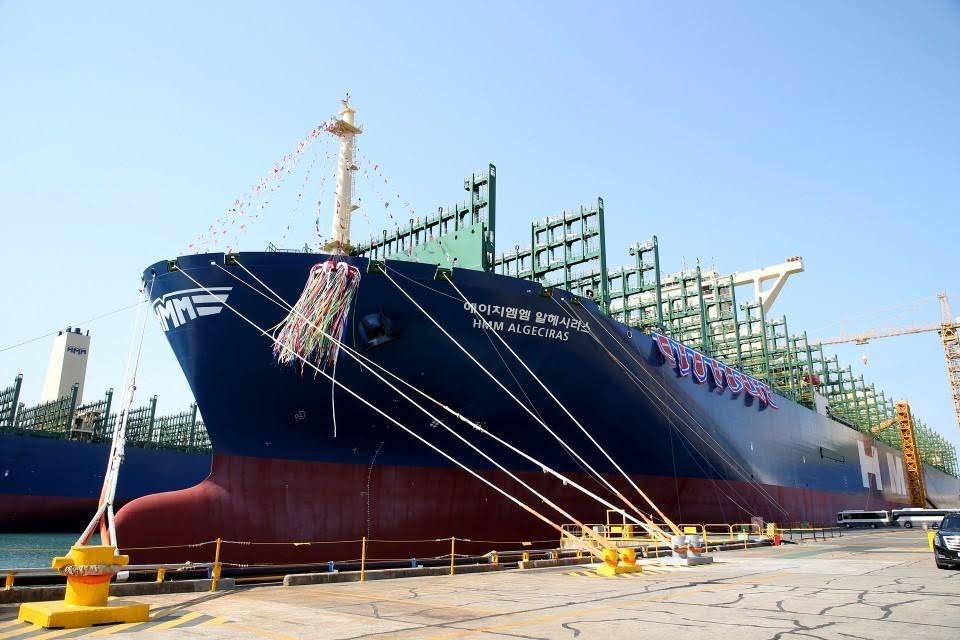
    Meet the HMM Algeciras, which was just launched by Daewoo Shipbuilding in South Korea. HMM is the new name of Hyundai Merchant Marine, the last big Korean container line left standing after the collapse of Hanjin Shipping in 2016. Hanjin’s bankruptcy and eventual dismemberment was a direct result of a market flooded with excess capacity due to carriers’ blind enthusiasm for very large ships. South Korea’s government made sure Hyundai Merchant Marine survived, and induced it to build 20 ships with extremely generous subsidies. Eleven more the size of HMM Algeciras are to be delivered later this year.

    These megaships, each capable of carrying as much cargo as 12,000 full-sized trucks, are being built not to meet the demands of exporters and importers, but rather to preserve jobs at South Korea’s shipyards, steel mills, and marine equipment manufacturers. South Korean President Moon Jae-in expressed the “hope that HMM continues to secure a competitive advantage as a Korean national flagship carrier.” Elected officials have to say such things, but the reality is that HMM will be hard-pressed to fill its new vessels with Korean and Chinese goods bound for Northern Europe. They might be the most efficient ships at sea when fully loaded. But it’s more likely they’ll lumber half-empty across the oceans, spouting red ink as they go.

    HMM Algeciras is just the latest example of megaship mania. Shipyards in China and Korea continue to turn out enormous vessels, even though the boom in container trade ended long ago. Once the COVID-19 pandemic has passed, globalization won’t go away, but it will have more to do with spreading ideas than with moving stuff in metal boxes. Many of the carriers unwise enough to own megaships are likely to need government help once more as they struggle to clean up a megamess.

  • No, the Coronavirus Won’t Kill Off Globalization

    The spread of COVID-19 has brought much commentary about the impending end of globalization. While the virus has indisputably disrupted the world economy, I think that many of the claims about its impact on international trade are overblown. Globalization is far from dead. Rather, it is changing in ways that were already apparent well before COVID-19 appeared in Wuhan last December.

    When people talk about globalization, they often have something specific in mind — the long value chains that have reshaped the manufacturing sector since the late 1980s. These chains emerged after the development of container shipping, falling communications costs, and more powerful computers made it practical to divide a complex production process among widely dispersed locations, performing each task wherever it is most cost-effective to do so.

    Value chains underlay the torrid growth of international trade in the final years of the twentieth century and the early years of the twenty-first. During those years, trade grew two or even three times as fast as the world economy, mainly because of increased shipments of what economists call “intermediate goods,” items made in one place that are being sent elsewhere for further processing. I refer to this period as the Third Globalization, because it was distinctly different from other periods — the decades before World War One, the years between 1948 and the mid-1980s — when international trade and investment grew rapidly, but international value chains were uncommon.

    Many companies decided where to locate various parts of their value chains based on production and transportation costs. But over time, complicated long-distance value chains often proved to be less profitable than they had imagined. As freight transportation became slower and less reliable, and as earthquakes and labor disputes resulted in goods not arriving on time, executives and their shareholders became more attuned to the vulnerabilities. Minimizing production costs ceased to be the sole priority. 

    Companies have taken a variety of measures to reduce risks in their value chains. They are keeping larger inventories in their warehouses, producing critical components at multiple locations rather than in a single large plant, and dividing exports among several ship lines and sending them through different ports. All of these measures help limit losses when value chains malfunction. But all of them make international sourcing more expensive.

    For most of the past decade, international trade has grown more slowly than the world economy, reversing the trend of the previous sixty years. Greater care when it comes to arranging value chains is one reason why. COVID-19 offers further reason to be careful. But it is not likely to cause manufacturers, wholesalers, and retailers to give up on globalization. The alternative, relying on a purely domestic value chain that can be interrupted by a flood or a fire, might create risks rather than contain them.